Please see Media Page for more Info
MENTAL BEHAVIORAL DISORDERS are serious CONCERN and need PROFESSIONAL CARE. We can help.
Substances and Alcohol Addiction
Addiction is a state of compulsive drug use; despite treatment and other attempts to control drug taking, addiction tends to persist. Clinical and laboratory observations have converged on the hypothesis
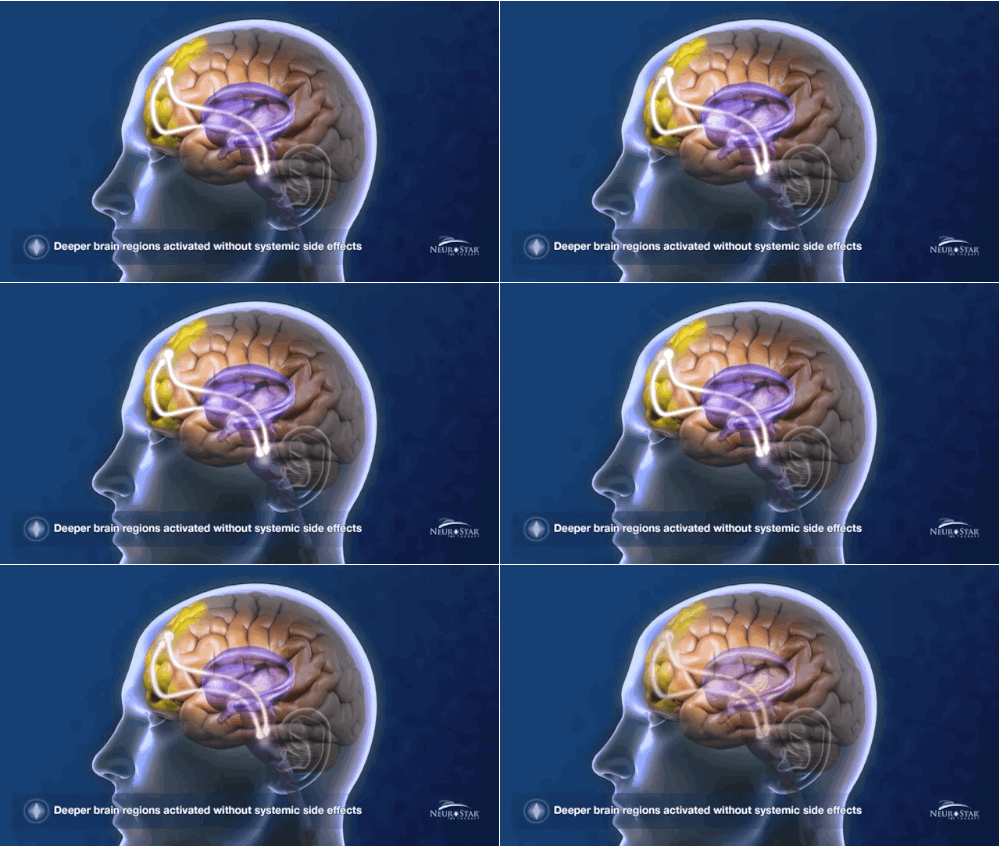
that addiction represents the pathological usurpation of neural processes that normally serve reward-related learning. The major substrates of persistent compulsive drug use are hypothesized to be molecular and cellular mechanisms that underlie long-term associative memories in several forebrain circuits (involving the ventral and dorsal striatum and prefrontal cortex) that receive input from midbrain dopamine neurons.
VCAT Treatment Plan for addiction is designed to address the regulation of dopamine in the area of midbrain and the frontal lobe to reduce craving as well as increasing beta waves for more plasticity increasing cognition.